NADD The Deacon Article: The Homily – Preaching for Encounter
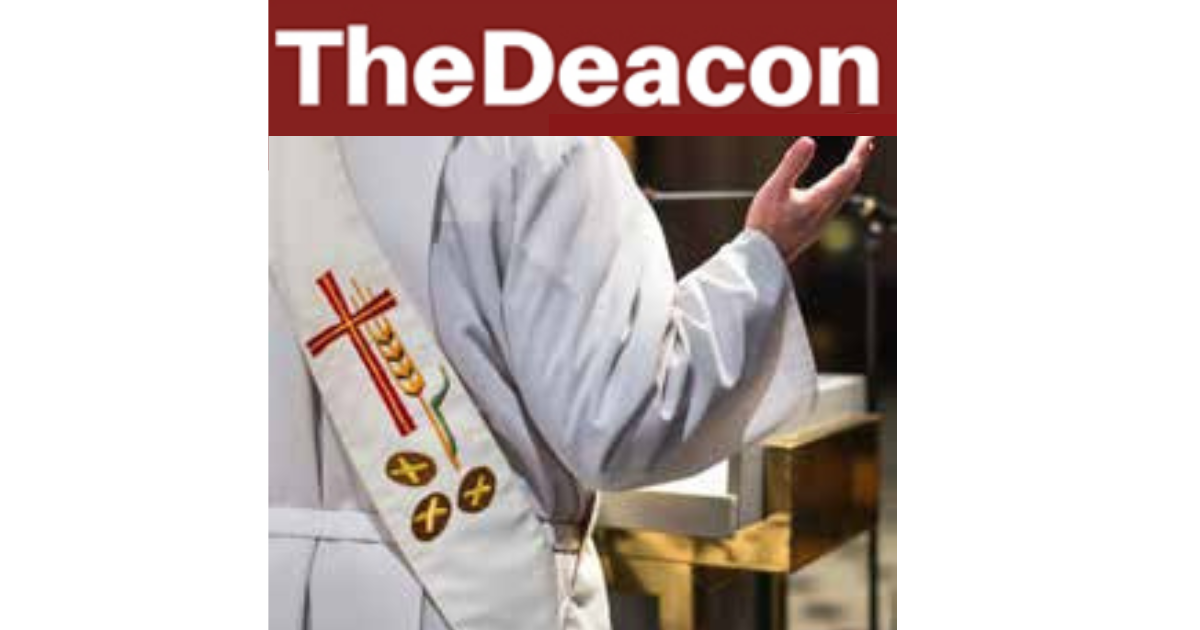
By Deacon Matthew Napoli
“Today this scripture has been fulfilled in your hearing.” (Luke 4:21) In our imagination, we might sense the excitement in the synagogue when Christ rolled up the scroll and handed it back to the attendant that day in Nazareth. After all, this was God himself speaking directly to his chosen people. This was, effectively, the first homily and Jesus was the preacher.
It is easy to see the homily as another task in our roles as deacons. Yet to be the instrument through which our God speaks to our assemblies is a sacred honor. We read in Verbum Domini that “the liturgy is the privileged setting in which God speaks to us in the midst of our lives; he speaks today to his people, who hear and respond.” (VG 52) We are reminded that the homily is “holy ground;” to recall whom is truly speaking in and through the words of the preacher.
Pope Benedict XVI and Pope Francis viewed the homily as an important part of the liturgy. In Verbum Domini, Pope Benedict XVI wrote, “The homily is a means of bringing the scriptural message to life in a way that helps the faithful to realize that God’s word is present and at work in their everyday lives. It should lead to an understanding of the mystery being celebrated, serve as a summons to mission, and prepare the assembly for the profession of faith, the universal prayer and the Eucharistic liturgy.” Pope Francis wrote this about the homily: “it surpasses all forms of catechesis as the supreme moment in the dialogue between God and his people which lead up to sacramental communion.” (Evangelii Gaudium 137)
Our identity as deacons is rooted in our configuration to Christ the Servant. As Jesus prepared, by removing his outer garment, to wash the feet of his disciples in the upper room, a deacon is obliged to prepare his homily with that same diligence. Through disciplined preparation of a homily, Christ speaks to his people and professes the same love and tenderness to today’s disciples as he did that Holy Thursday. That is a critical component of our mission. In Evangelii Gaudium, Pope Francis states, “Preparation for preaching is so important a task that a prolonged time of study, prayer, reflection and pastoral creativity should be devoted to it.”
Most homilists seek to be more effective preachers, yet the demands of ministry and a perception of personal inadequacy – or, dare we say, superiority – leads to complacency in our preaching. The Congregation For Divine Worship And The Discipline Of The Sacraments – The Homiletic Directory (HD) reminds us “It is not necessary to be a great orator to be an effective homilist.” (HD 3) However, it does demand that we tend to our interior life, connect with those in our congregations, stay attune to current events, make room for the Spirit and strive to preach more effectively.
It is incumbent upon us to seek out the tools necessary to sharpen our skills and grow as preachers. Opportunities to do that abound. It could be as simple as studying the Homiletic Directory or reading the writings of Popes Benedict XVI and Francis, or exploring the resources/ preaching conferences at the Marten Program in Homiletics and Liturgics or the Sacred Heart Seminary and School of Theology. It may be to follow the 48 priests and deacons who recently completed an eighteen-month hybrid program through the Institute of Homiletics at the University of Dallas.
Preaching is a privilege, but with it comes tremendous responsibility. Our call is to treat it with reverence; to strive for encounter between God and his people by being the instrument through which God speaks to them.
Deacon Matt Napoli was ordained a permanent deacon in August 2022. He serves at St. Elizabeth Seton in Naperville, IL. He earned his MA in Theology at the University of Notre Dame in 2024.